A Floor That Leaves Room for Living
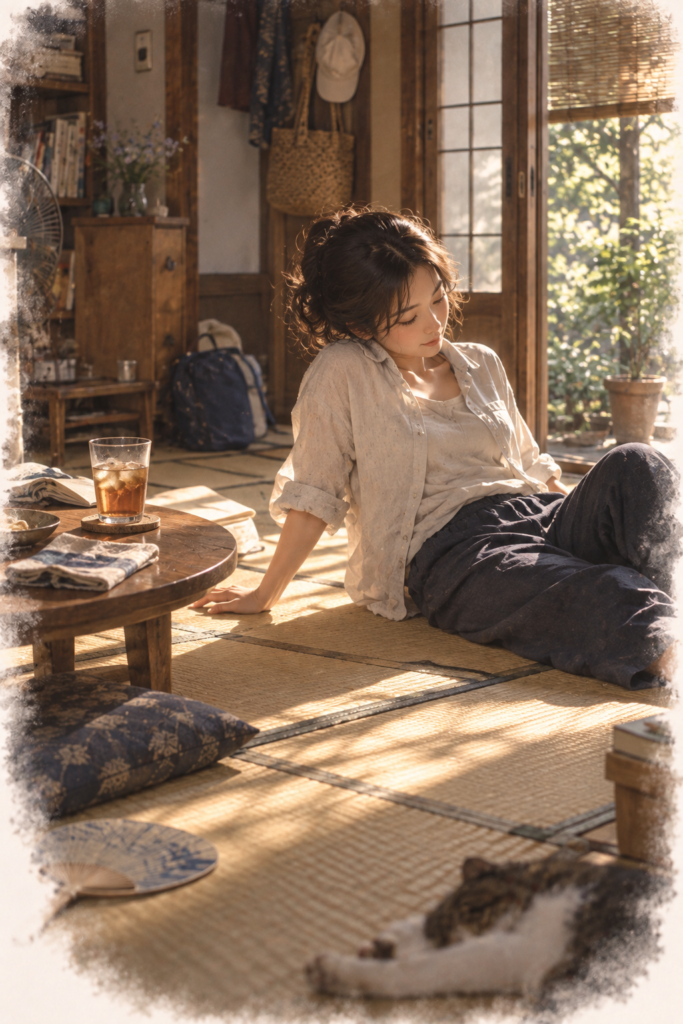
After returning from a walk that lasted a little longer than usual, a glass of cold tea is finished in one breath.
Then comes the quiet urge to lie down. No one suggests it. It simply happens.
Tatami seems to have that kind of quiet invitation.
A chair is made for sitting. Tatami is different.
You may sit. You may stretch out. You may read a book. You may close your eyes for a short nap.
Lay out a futon, and it becomes a bedroom. Gather around a low table, and it becomes a dining room. Welcome a guest, and it becomes a place for conversation.
There is rarely a fixed answer to what the room is supposed to be. Instead, it quietly changes with everyday life.
For a long time, Japanese homes have kept spaces like this. Perhaps that is why removing shoes at the entrance feels meaningful.
Beyond the doorway lies more than a floor to walk on.
It is a place to sit,
to lie down,
to talk,
and to sleep.
A place where everyday life unfolds.
This way of living was probably shaped by generations who learned to make the most of limited space.
“Could life be made just a little more comfortable?”
Perhaps tatami was what quietly answered that wish.
On days when the walk is a little longer than usual,
a glass of cold tea is emptied,
and the body gently settles onto the floor.
Even today,
tatami seems to whisper,
“Rest here for a while.”
More in
Objects
Or wander further through
Archive