What We Cannot Simply Throw Away
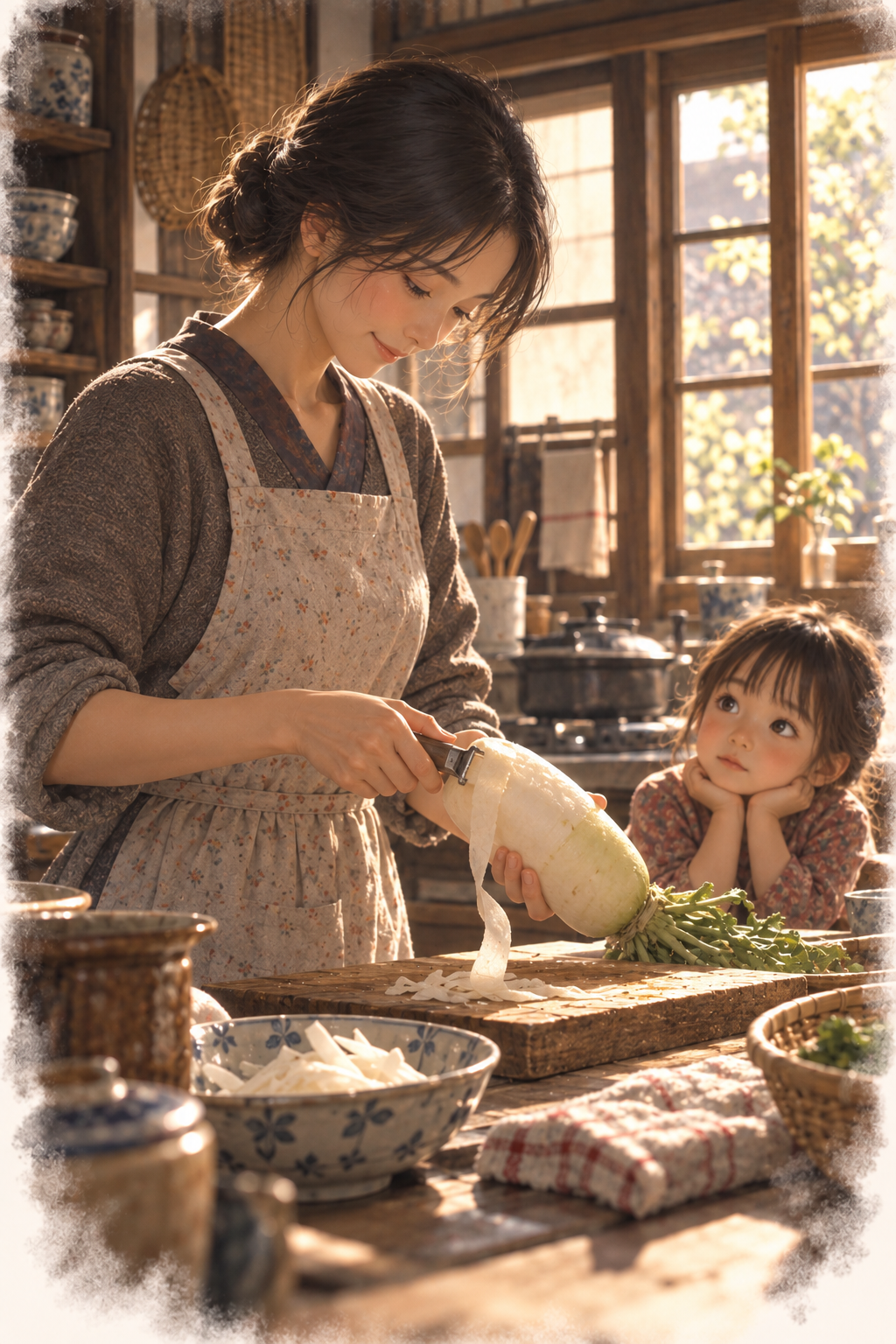
“If you peel the daikon that thickly, what a waste.”
“This dress can still be worn. It would be mottainai to throw it away.”
Mottainai was one of my mother’s favorite expressions. She had spent her adolescence during the war, when even the most basic goods were desperately scarce. I had always assumed that her habit of saving things came from nothing more than that experience.
My mother rarely threw food away. Nor was she quick to discard old clothes. It could still be eaten. It could still be worn. It could still be used. As long as something had even the smallest purpose left in it, she was reluctant to let it go.
As a child, I sometimes found this tiresome. She would keep things that, to my eyes, had already served their purpose. Surely it would be cleaner, easier, and more pleasant simply to replace them with something new.
Still, looking at the object itself, she would say,
“It can still be used. It would be mottainai.”
After listening to a Buddhist priest speak last night, something in my mind began to loosen. Not only human beings and animals, he explained, but plants, mountains, rivers, and the rest of the natural world—even stones and other inanimate things—can attain Buddhahood. It is an idea that developed in a distinctive way within Japanese Buddhism.
Of course, my mother had never formally studied such teachings. Nor do I remember her ever speaking about Buddhism in any complicated way.
And yet, a thought occurred to me.
Perhaps she approached food and everyday objects with something resembling that sense.
A strip of daikon peel still had a purpose. So did an old piece of clothing. To throw something away before its usefulness had ended was to deprive it of the role it still had to play. And so, its role should be allowed to reach completion. In other words, it should be used fully.
Perhaps, for my mother, mottainai did not simply mean being economical. Nor was it merely an instruction not to waste things.
Something before her was still trying to live. Its remaining strength should be allowed to work until the very end.
Could such a feeling have been contained within that familiar word?
“Surely not.”
The thought makes me smile. I doubt that my mother ever considered the matter so deeply. Had I asked her, she would probably have answered,
“I use it because it can still be used.”
But ideas are not always passed down through words. Over long stretches of time, they may seep into ordinary life until they become habits that no longer require explanation.
Perhaps my mother’s mottainai was one of those habits.
Something deeply inscribed, somewhere within her.
It seems permissible, at least, to imagine that it was.
More in
Words
Or wander further through
Archive